
Benazir Nashonuma Programme Update: Major Midline Outcomes You Should Know
The Benazir Nashonuma Programme, operating under the Government of Pakistan’s Benazir Income Support Programme (BISP), has now become one of the most impactful social protection and nutrition initiatives in the country.
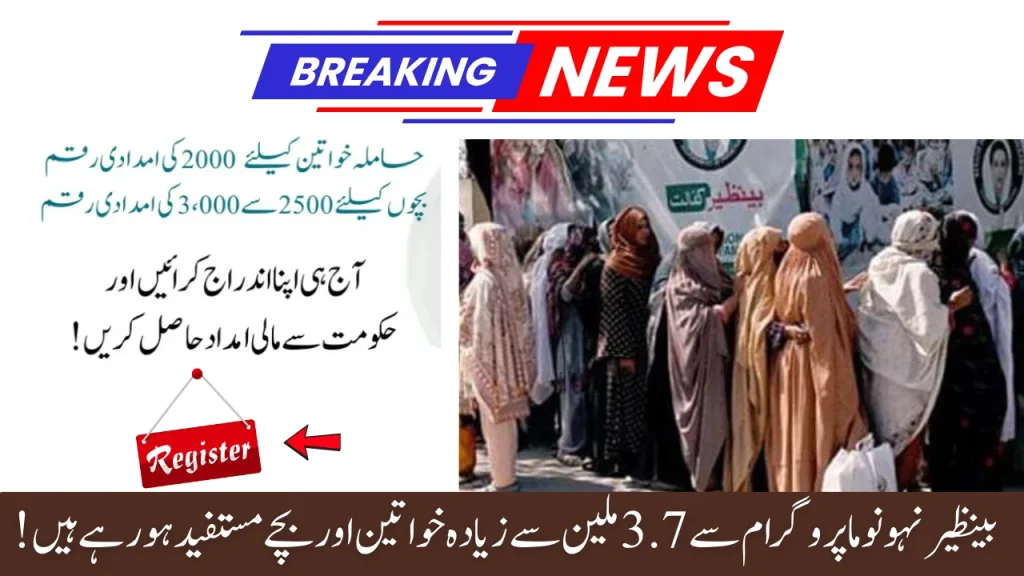
As Pakistan continues its fight against malnutrition, stunting, and child mortality, the Nashonuma Program stands out as a national model for improving the health of mothers and children.
The government scaled up the programme nationwide in 2023, and today it has transformed into one of Pakistan’s most successful health interventions.
Nationwide Reach: Over 3.7 Million Women & Children Benefiting
Since its expansion, the Benazir Nashonuma Programme has reached more than 3.7 million mothers and children across Pakistan. This includes beneficiaries from remote rural areas, underserved communities, and regions where malnutrition rates have historically been highest.
The programme provides:
- Specialized nutritious food for children and mothers
- Quarterly cash assistance for pregnant and lactating women
- Regular health check-ups and awareness sessions
- Mandatory immunizations, growth monitoring, and antenatal care
By linking financial aid with health compliance, the programme ensures long-term improvement in maternal and child nutrition.
Launched as a Conditional Cash Transfer (CCT) programme, Unlike Benazir Kafalat Programe that is unconditional programe, Nashonuma ensures that pregnant women, lactating mothers, and children under two years receive the nutritional support and health services they urgently need.
Exceptional Global-Level Results: A Breakthrough for Pakistan
The Benazir Nashonuma initiative made remarkable strides, according to a recent midline evaluation, which established a global standard for extensive nutrition initiatives.
Key findings show:
- Stunting rates among children under two have significantly decreased.
- Higher percentages of child survival as a result of early medical intervention
- Significant drop in zero-dose children, indicating that fewer kids are still unvaccinated
- Improved maternal health during pregnancy and post-childbirth
Experts are calling these outcomes “one of the strongest ever recorded globally for a programme of this scale.”
Why the Nashonuma Programme Matters
Pakistan has long struggled with:
- High child stunting and wasting
- Low immunization rates
- Poor maternal nutrition
- Limited access to antenatal services
The Benazir Nashonuma Programme directly addresses these issues through a combination of financial support, nutrition services, and strict health compliance monitoring. It ensures that mothers receive proper care, children receive early nutrition, and families are encouraged to follow best health practices.
Government’s Commitment to Better Nutrition
Under BISP’s leadership, the government continues to invest heavily in improving social protection and maternal-child health. Nashonuma’s success has encouraged further planning for:
- Expanding more Nashonuma centers nationwide
- Enhancing quality of nutrition packages
- Strengthening digital monitoring for beneficiary tracking
- Reducing stunting and wasting on a long-term, sustainable basis
This makes Nashonuma one of Pakistan’s most important initiatives in promoting healthier generations.
Conclusion
The Benazir Nashonuma Programme has become a milestone in Pakistan’s efforts to eradicate child malnutrition and support vulnerable mothers. By reaching over 3.7 million beneficiaries and showing exceptional global-level results, Nashonuma has proven that well-structured social protection programs can significantly improve national health outcomes.
As the government continues to strengthen BISP’s nutrition initiatives, the programme promises a brighter, healthier future for millions of families across Pakistan.