
Lahore Traffic Update: Qingqi Rickshaws Banned on Five Key Roads
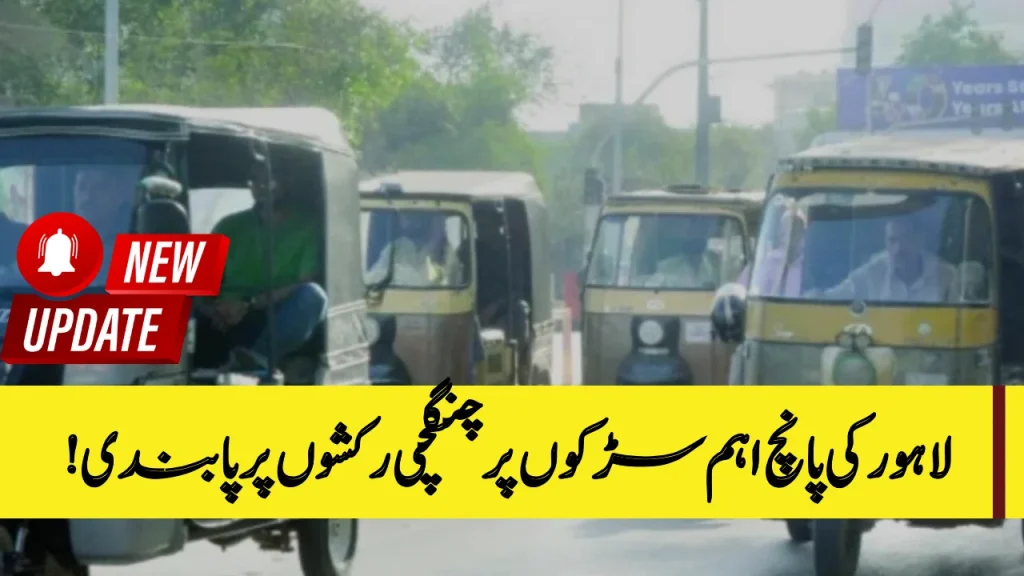
The Punjab government has officially imposed a ban on Qingqi rickshaws across five major highways in Lahore to improve traffic flow and curb environmental pollution. According to the latest directives, Qingqi rickshaws will no longer be allowed to operate on:
- Mall Road
- Jail Road
- Canal Road
- Main Boulevard Gulberg
- Main Ferozepur Road
Officials confirm that this step has been taken to reduce congestion on Lahore’s busiest routes, ensuring smoother traffic movement and enhanced road safety.
Why the Ban Was Imposed
The decision aligns with the government’s broader strategy to combat smog, reduce emissions, and improve urban mobility.
Authorities stated that Qingqi rickshaws often cause traffic blockages and contribute to higher pollution levels. With Lahore repeatedly ranking among the world’s most polluted cities, the government is speeding up measures to control toxic air levels.
LHC Orders Strict Action Against Smoke-Emitting Vehicles
The Lahore High Court (LHC) has also intensified its crackdown on smoke-emitting transport across the city. In a recent hearing:
- The court ordered immediate inspection of all government and private buses,
- Directed authorities to shut down vehicles emitting smoke,
- Highlighting that Punjab University buses are also contributing to rising pollution and must be taken off the roads if found non-compliant.
The Environmental Commission informed the court about the persistent issue of smoke emission and inadequate maintenance of public vehicles, urging strict enforcement.
Tree Cutting at Nasir Bagh Raised in Court
During the proceedings, the LHC bench also expressed concern over reports of tree cutting at Nasir Bagh, a historic location in Lahore.
Key observations included:
- Trees are reportedly being cut despite repeated assurances from government departments.
- The Parks and Horticulture Authority (PHA) was asked to clarify whether it had approved the cutting.
- The Lahore Development Authority (LDA) shared that seven large trees will be relocated, not destroyed, to facilitate an underground parking project.
Justice Shahid Karim emphasized the importance of preserving Lahore’s green heritage while balancing urban development needs.
Parking Projects to Ease City Congestion
The government also briefed the court about ongoing development efforts:
- An underground parking facility is planned at Nasir Bagh to address chronic parking issues.
- A new parking plaza near Neela Gumbad is already underway and has been termed a positive step for reducing roadside parking pressure.
These projects are expected to improve traffic flow and reduce illegal parking on major city roads.
Conclusion
The Punjab government’s ban on Qingqi rickshaws across five key Lahore roads marks a major step toward easing traffic congestion and combating pollution. Combined with the Lahore High Court’s push against smoke-emitting vehicles and the government’s focus on protecting green spaces, these measures reflect a broader strategy to create a cleaner and more organized Lahore.
As enforcement begins, authorities are urging transport operators, students, and daily commuters to follow the new rules to support a healthier environment and smoother travel experience across the city.