
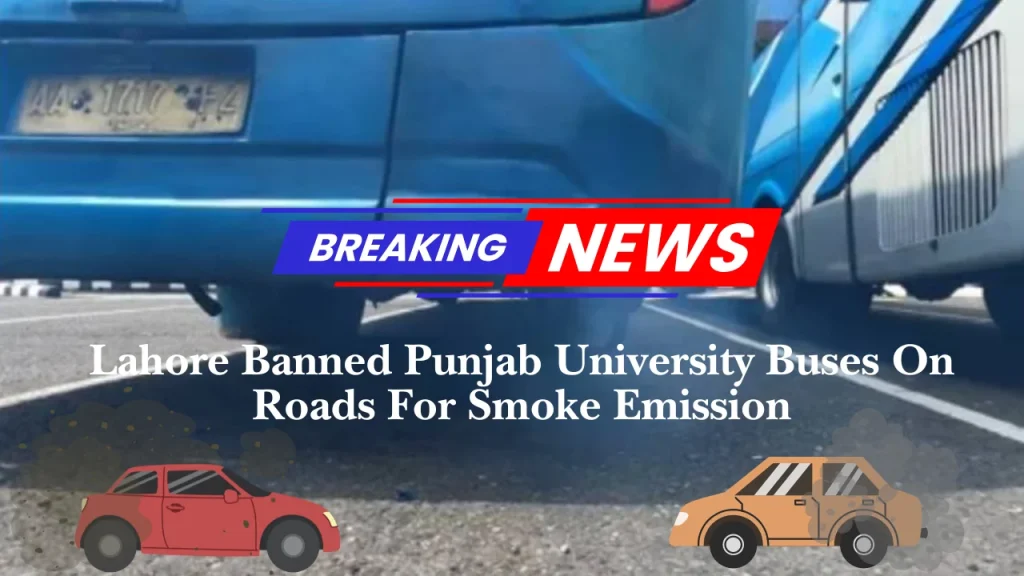
Lahore Banned Punjab University Buses On Roads For Smoke Emission
Authorities in Lahore have put a ban on Punjab University (PU) buses in an audacious attempt to reduce air pollution and safeguard public health after multiple buses were discovered to be producing excessive amounts of smoke.
Any PU buses or other large vehicles that don’t adhere to emission and fitness criteria would be forcibly removed from the road or impounded under the new instruction.
No PU Buses On Roads: New Directive
Following a ruling by the Lahore High Court, the Environment Protection Agency (EPA) in Lahore stopped two buses from Punjab University due to smoke emissions.
According to a department representative, the action was done in accordance with the court’s order. The university’s employees neglected to provide a current environmental fitness certificate for the buses, and it was discovered that they were emitting dangerous pollutants.
Legal Action Taken Against Polluting Buses
Authorities have initiated formal legal proceedings under the Environmental Protection Act against the two Punjab University buses found emitting excessive smoke. This move comes after repeated violations of environmental regulations, putting public health at risk.
Last month, the Lahore High Court (LHC) had issued a strict directive, instructing relevant authorities to take immediate action against any vehicles that fail to comply with air quality and emission standards.
The legal proceedings against these buses highlight the enforcement of the court’s orders and signal zero tolerance for environmental violations in the city.
Court Observes Widespread Smoke-Emitting Vehicles
Justice Shahid Karim voiced grave concerns during the most recent hearing on the increasing number of cars in Punjab, especially in Lahore, that are producing dense smoke.
The court emphasized that numerous buses, trucks, and other large vehicles were clearly contaminating the air, thus exacerbating the city’s deteriorating smog conditions.
In order to successfully regulate air pollution and safeguard public health, Justice Karim encouraged provincial authorities to enact more stringent enforcement measures, such as penalties, vehicle inspections, and the removal of non-compliant cars.
Court Halts Construction in Ghalib Market Park Over Tree-Cutting Concerns
The petitioner’s attorney expressed grave worries about the removal of trees from Ghalib Market Park in order to construct new tennis courts. Justice Shahid Karim questioned the need and rationale for cutting down mature trees in a public park throughout the proceedings, stressing that such construction shouldn’t jeopardize green areas intended for public use.
In response, the court mandated that all park building be stopped right away. The Director General of the Lahore Parks and Horticulture Authority (PHA) was also instructed to make sure that the order was strictly followed and to safeguard the environment and trees in the park.
Conclusion
The recent actions in Lahore, including the ban on smoke-emitting Punjab University buses and the halt of construction in Ghalib Market Park, underscore the city’s commitment to protecting public health and preserving the environment. Strict enforcement of emission standards and safeguarding green spaces demonstrate a proactive approach by authorities and the judiciary to tackle pollution, promote sustainability, and ensure a cleaner, healthier city for residents.