
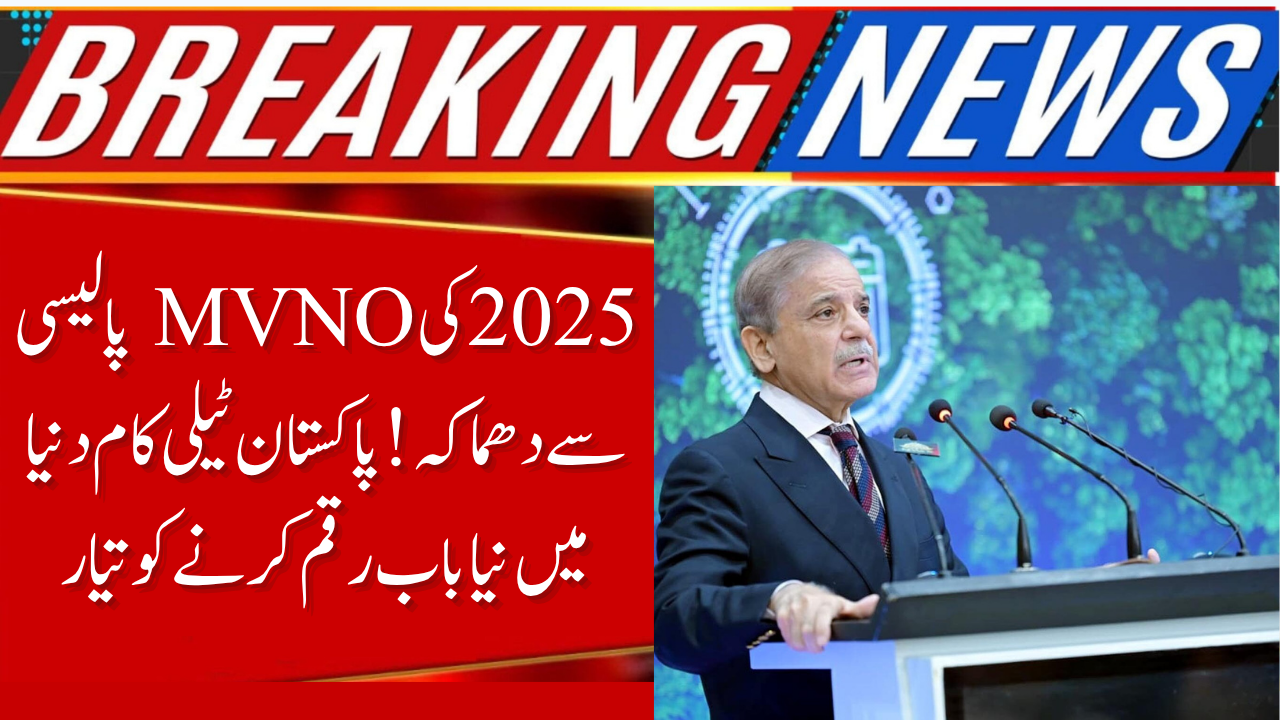
PM Shehbaz’s 2025 MVNO Strategy – Driving Pakistan’s Telecom Transformation
Prime Minister Shehbaz Sharif has taken a significant step towards digital transformation with the PM Shehbaz MVNO Policy 2025, aimed at accelerating the introduction of Mobile Virtual Network Operators (MVNOs) in Pakistan. This initiative seeks to modernize the telecom landscape, draw in global investments, and empower smaller firms to thrive in a competitive and innovative digital marketplace.
What is the PM Shehbaz MVNO Policy 2025?
The PM Shehbaz MVNO policy 2025 is part of a larger vision to foster a more competitive and inclusive telecom industry. The Prime Minister has instructed the Ministry of Information Technology and Telecommunication (MoITT) to accelerate the execution of a long-awaited MVNO framework that aims to transform telecom service operations in Pakistan.
This instruction followed a pre-cabinet briefing, wherein PM Shehbaz stressed the urgency to finalize and approve the framework expeditiously. Once the federal cabinet approves it, it will facilitate the entry of new players into Pakistan’s telecom market within a clearly defined and transparent regulatory structure.

Understanding MVNOs and Their Role in Telecom
An MVNO (Mobile Virtual Network Operator) is a telecom entity that does not possess its own spectrum or network infrastructure. Instead, it collaborates with existing Mobile Network Operators (MNOs) to provide services under its own brand name.
The MVNO framework established by the Pakistan Telecommunication Authority (PTA) specifies how these operators will function. Each MVNO will be issued a 15-year license, allowing them to offer tailored mobile services throughout Pakistan. The initial nationwide license fee has been set at $140,000, payable in local currency based on the exchange rate set by the National Bank of Pakistan.

Key Features of the PM Shehbaz MVNO Policy 2025
1. Promoting Fair Competition
The new policy fosters equitable market practices by enabling smaller telecom operators to operate alongside major entities. This will boost competition, enhance service quality, and provide consumers with better pricing and options.
2. Regulatory and Financial Framework
Both MVNOs and their partner MNOs will be required to pay annual regulatory fees and contribute to the Universal Service Fund (USF) and Research & Development Fund (R&D Fund). These payments will be based on total annual revenue, ensuring sustainable growth within the sector.

3. Quality Assurance and Customer Service
The policy obligates MVNOs to uphold service quality standards set by the PTA. They are required to establish at least one customer care center per operational city and maintain a 24/7 nationwide helpline for customer support.
4. National Security and Compliance
MVNOs must adhere to national security protocols, which include lawful data interception, SIM activation processes, and compliance with the Device Identification Registration and Blocking System (DIRBS).

5. Service Continuity and Accountability
Parent MNOs are mandated to ensure uninterrupted services to their MVNO partners and are prohibited from suspending agreements without prior PTA consent. Similarly, MVNOs are required to provide a minimum three-month notice before ceasing any service, thus ensuring transparency and consumer protection.
Impact on Pakistan’s Telecom Sector
The PM Shehbaz MVNO policy 2025 is anticipated to attract foreign investment, create new business prospects, and promote digital inclusion throughout both urban and rural regions. By encouraging innovation and lowering market entry barriers, this policy underpins Pakistan’s long-term vision of becoming a digitally empowered economy.

Additionally, the initiative aligns with the government’s overarching “Digital Pakistan Vision,” which aims to connect citizens, streamline governance, and broaden e-services throughout the country.
Conclusion
The PM Shehbaz MVNO policy 2025 signifies a pivotal moment in the evolution of Pakistan’s telecom sector. By allowing MVNOs to function within a clearly defined regulatory framework, the government is fostering opportunities for innovation, affordability, and enhanced connectivity.
With effective implementation, this policy has the potential to not only transform Pakistan’s telecom industry but also bolster its standing in the global digital economy.