
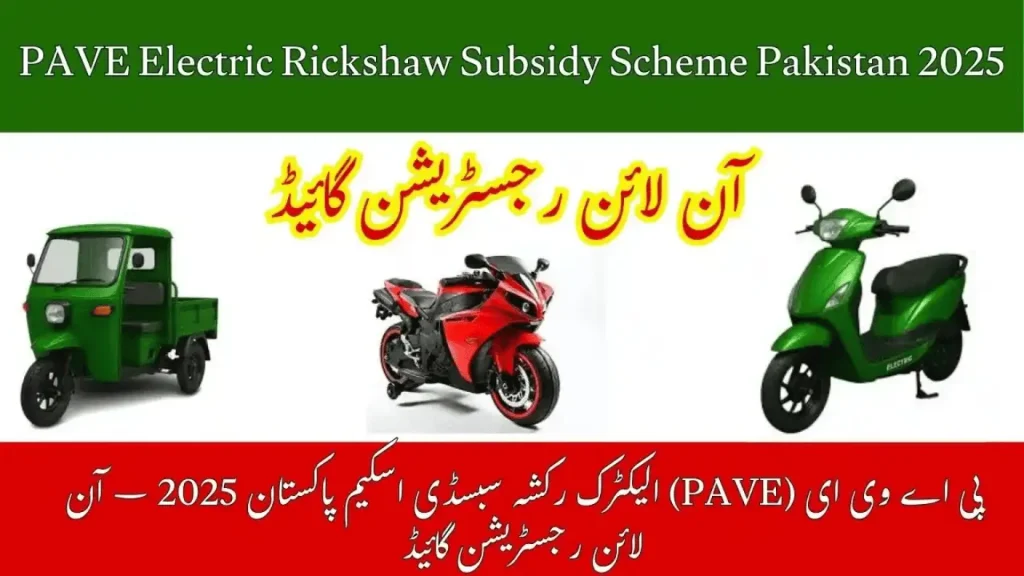
2025 PM Electric Rickshaw Program: Online Application and Information
If you’ve ever pondered whether operating a rickshaw could be more affordable, eco-friendly, and free from escalating fuel expenses, the PM Electric Rickshaw Scheme 2025 is specifically aimed at achieving that. The government of Pakistan is initiating this program to assist drivers and small transport business owners in transitioning from petrol to electric three-wheelers, thereby making daily commuting more economical and reducing pollution levels.
Also read: PAVE Electric Bike Scheme 2025: A Greener Ride for Pakistanis
Here’s a brief overview before we dive into the details.
Quick Summary of the Scheme
| Feature | Detail |
|---|---|
| Scheme Name | PM Electric Rickshaw Scheme 2025 (under PAVE Program) |
| Target | Rickshaw drivers, small transport owners, youth |
| Subsidy | Approximately Rs. 80,000 per electric rickshaw |
| Monthly Installment | About Rs. 10,000–11,000 |
| Application Fee | Rs. 1,048 |
| Deadline | 30 September 2025 |
| Selection Process | Computerized balloting |
| Quotas | Persons with disabilities, overseas Pakistanis |
Why the Scheme Matters
Operating a rickshaw on petrol or CNG has become challenging for drivers. Increasing fuel prices are diminishing profits, and maintenance is a continual burden. The PM Electric Rickshaw Scheme 2025 proposes a solution by making electric three-wheelers accessible through manageable installments.
The broader vision is equally compelling. Electric vehicles are integral to Pakistan’s long-term strategy aimed at lowering fuel imports, enhancing air quality in crowded cities, and bolstering domestic EV manufacturing.
Also read: ACAG Online Apply 2025: Your Path to Your Dream Home
Key Features of the PM Electric Rickshaw Scheme 2025
Subsidized Pricing
Every successful applicant will benefit from a subsidy of around Rs. 80,000, making the vehicle more attainable.
Easy Installments
Rather than making a substantial upfront payment, drivers can opt for monthly installments as low as Rs. 10,000–11,000 based on the model.
Transparent Selection
Successful candidates will be selected through a computerized ballot, ensuring impartiality and preventing favoritism.
Special Quotas
The program also reserves spaces for:
- Women entrepreneurs aspiring to launch their own transport services.
- Persons with disabilities to promote autonomous mobility.
- Overseas Pakistanis looking to assist their families with an asset.
Who Can Apply
The scheme is accessible to:
- Pakistani citizens possessing a valid CNIC.
- Individuals aged 21 years and above (up to 65 for rickshaws).
- Persons not currently benefiting from another EV subsidy.
- Both men and women with a valid driving license.
Documents You’ll Need
Ensure you gather the following before applying:
- Copy of CNIC
- Driving license (for rickshaw drivers)
- Passport-size photo
- Proof of residence (utility bill or domicile)
- Fee deposit slip (Rs. 1,048)
- Documents related to quotas (if applying under a reserved quota)
How to Apply
Applying is simple and entirely online:
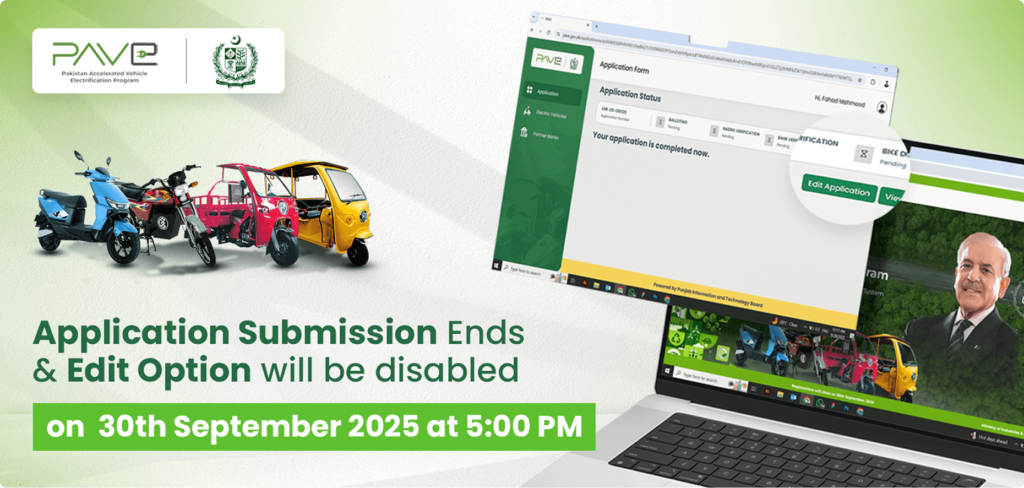
- Visit the PAVE portal.
- Register using your CNIC, mobile number, and email.
- Log in and select the electric rickshaw option.
- Upload the necessary documents.
- Pay the application fee (Rs. 1,048).
- Submit and await ballot results after the closing date.
If your name is drawn, you’ll be notified via SMS or email to proceed with installment payments and delivery.
Cost & Savings Breakdown
Let’s crunch the numbers:
- Assuming a petrol rickshaw spends Rs. 1,200 on fuel daily.
- An electric rickshaw, fully charged overnight, costs about Rs. 300–350 for the equivalent distance.
- This translates to nearly Rs. 25,000–30,000 saved each month.
For a driver with family obligations, these savings can be transformative.
Challenges You Should Know
While the scheme holds great promise, certain challenges exist:
- Charging stations are limited outside of major urban areas.
- Battery maintenance is crucial—neglect can degrade performance.
- High demand may result in some applicants not being selected in the ballot.
Nonetheless, with increasing investments in EVs, these challenges are expected to lessen in the coming years.
A Real-Life Scenario
Consider Ali, a 30-year-old rickshaw driver from Faisalabad. He makes about Rs. 2,000 daily, but nearly half goes towards petrol. By opting for an electric rickshaw through this scheme, he reduces fuel costs by 70%. His monthly installment is Rs. 10,500, which he comfortably manages with the savings alone. In three years, he will own the rickshaw free of debt and enjoy greater profits.
What’s Next for the Scheme
The government has indicated that this is just phase one. Additional electric rickshaws and e-bikes will be introduced in subsequent phases. International EV manufacturers are also taking interest, featuring new models with ranges up to 200 km per charge.
If successful, Pakistan’s transport system might undergo a significant transformation in the next five years.
FAQs about PM Electric Rickshaw Scheme 2025
1. Can I apply if I already own a petrol rickshaw?
Yes, as long as you satisfy the eligibility criteria and haven’t previously received another EV subsidy.
2. Do I need to make the full payment upfront?
No, the scheme facilitates easy installments with a government subsidy applied.
3. How will I be notified of my selection?
Results will be revealed through an online ballot, and successful candidates will be contacted via SMS/email.
4. Is the scheme accessible in all provinces?
Yes, it is available throughout Pakistan, incorporating province-wise quotas for fairness.
5. What if I miss the deadline?
You’ll need to wait for the next phase. Applications for the first round close on 30 September 2025.
Final Thoughts
The PM Electric Rickshaw Scheme 2025 represents more than just a subsidy initiative. It’s a pathway to stability for countless families, a step towards cleaner urban environments, and a testament that sustainable transportation is not a dream of the future—it’s a reality today.
If you’re a rickshaw driver or contemplating entering the business, this could be your opportunity to invest in a future marked by reduced costs, increased earnings, and a smaller environmental footprint.